My coworker, C, is an absolute treasure when it comes to STEAM! She’s super excited and interested in the topic and that excitement helps get the kids in the program just as excited. C wanted to begin offering a regular STEAM program for the tween audience and I thought it was a great idea. We decided to do it bimonthly and to see where it goes from there! As C’s mentor librarian I get to be in on the fun, help brainstorm pieces of the program, and co-run it. But really? C is so intuitive, experienced (in a school setting), and passionate about this topic that I honestly didn’t need to do too much in terms of directing or brainstorming. Here’s what C did for this first session:
For this session, C wanted to begin with the concept of scientific observation to build future sessions on. She focused on the body’s five senses to frame this and had stations set up to go with each sense. Finally, she wanted to end with a craft or creative activity of some kind. Slime was what we settled on because we could add in textured items, scents, and colors to represent some of the five senses. Because slime would absolutely take over if we involved it in the stations, we split the program up into two main parts. The first half was spent exploring the stations at their own pace. Then after half our time was up, we all moved onto making slime as an entire group. This way the attention wasn’t split and we were able to enjoy both.
Goals: Some of our goals with this program were 1) To have fun and spark creativity within the science, technology, engineering, and math concepts, 2) Promote a growth-mindset and work in the design process, and 3) Boost confidence and skills among tweens in a pro-social environment where they can collaborate and problem-solve together. We had our first session earlier this month and it was a lot of fun, messy as can be, and so worth it!
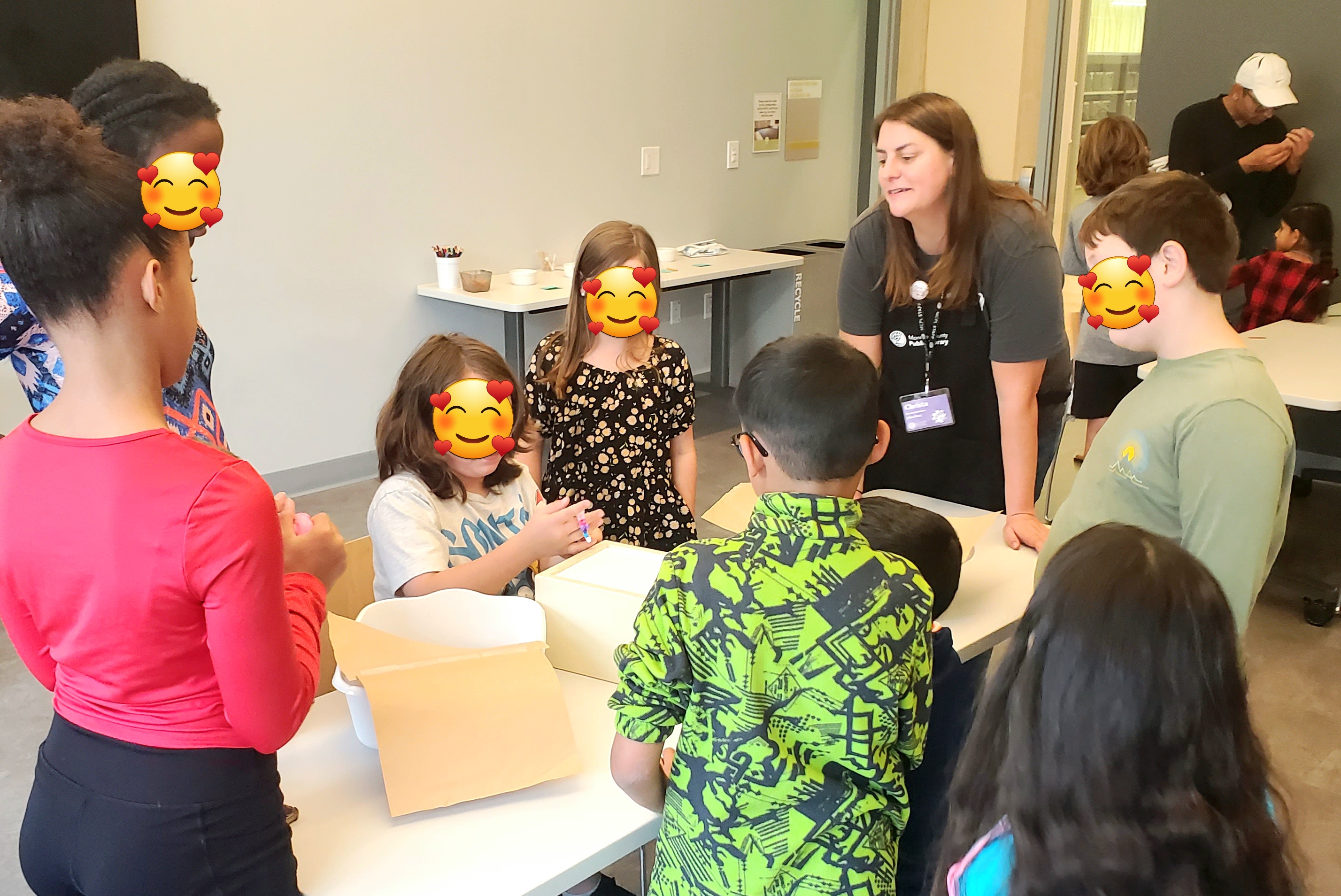
Description: This hands-on STEAM learning experience will provide a short intro and discussion. Then, we’ll get to our hands-on experimentation as we design, build, test, and repeat. Ages 7-12.
Items Needed: We’re lucky that our library owned some of the tools we needed such as a mystery box, a laptop and a resource we were promoting, and microscopes. However, we utilized a lot of common materials and homemade solutions. The only thing we really had to purchase were the tasting and smelling materials as well as the ingredients for slime. Overall, it cost about $30 for those objects we didn’t already own.
Station 1: Sound
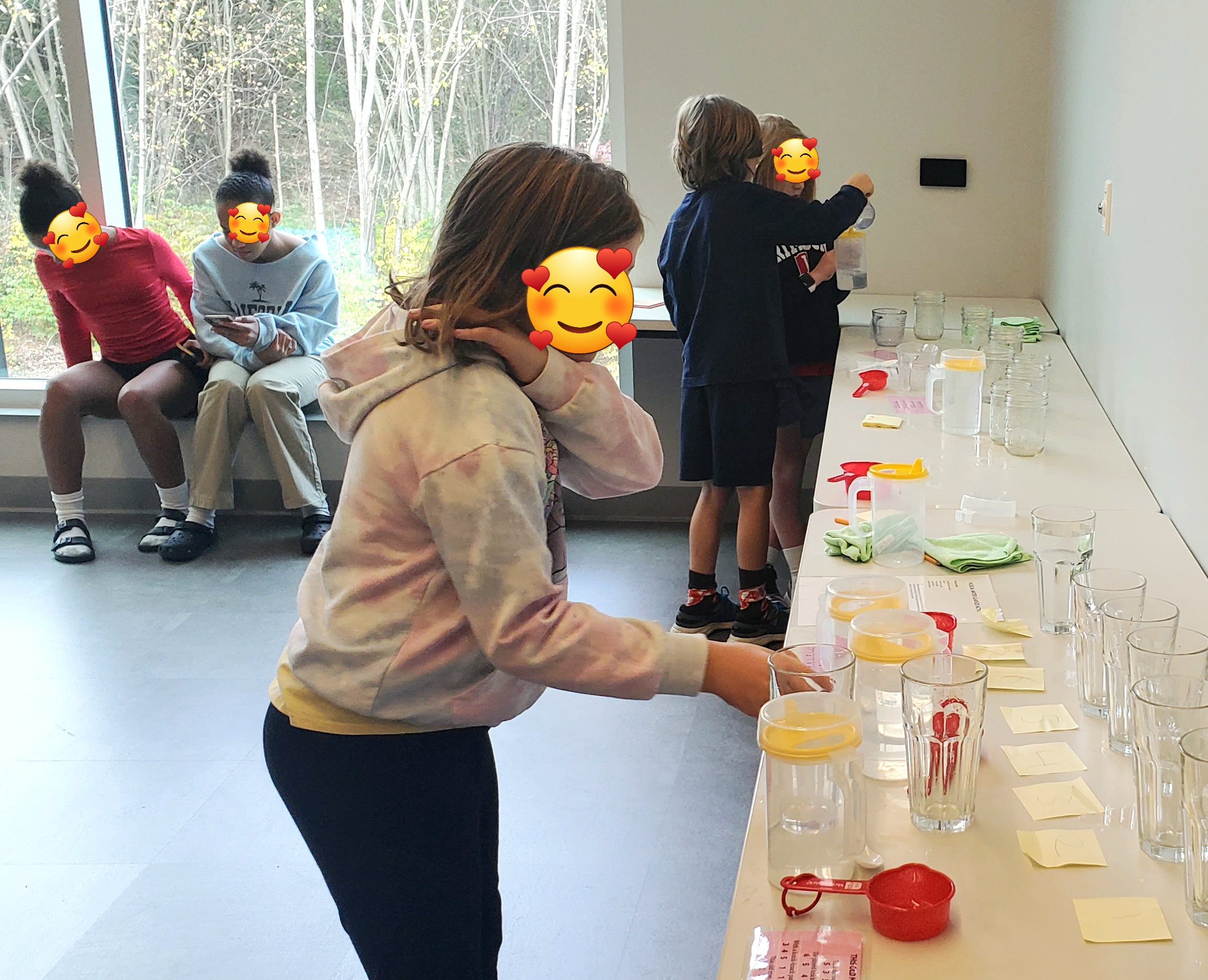
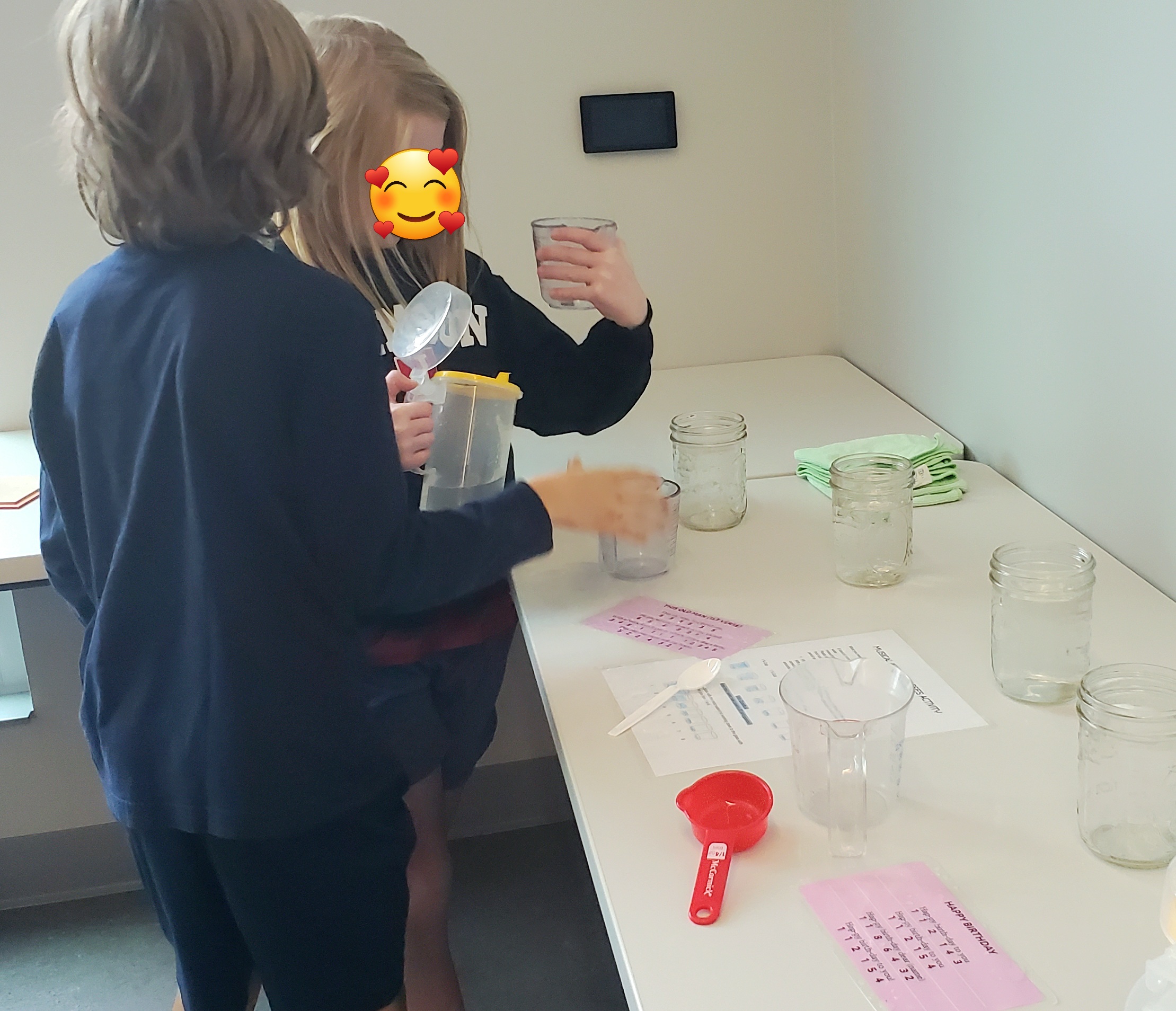
C set up this station with two activities. 1) Sound matching. Our library owns these little wooden tubes that have different objects inside. Kids were able to listen to the sounds, then match them together. 2) Musical Water Glasses. Kids measured and poured different amounts of water into glasses, then by gently tapping on them with a chopstick, would notice the pitch of the sound. They could choose to experiment with adding more or less water or follow directions so that they could play Twinkle Twinkle Little Star.
Station 2: Sight
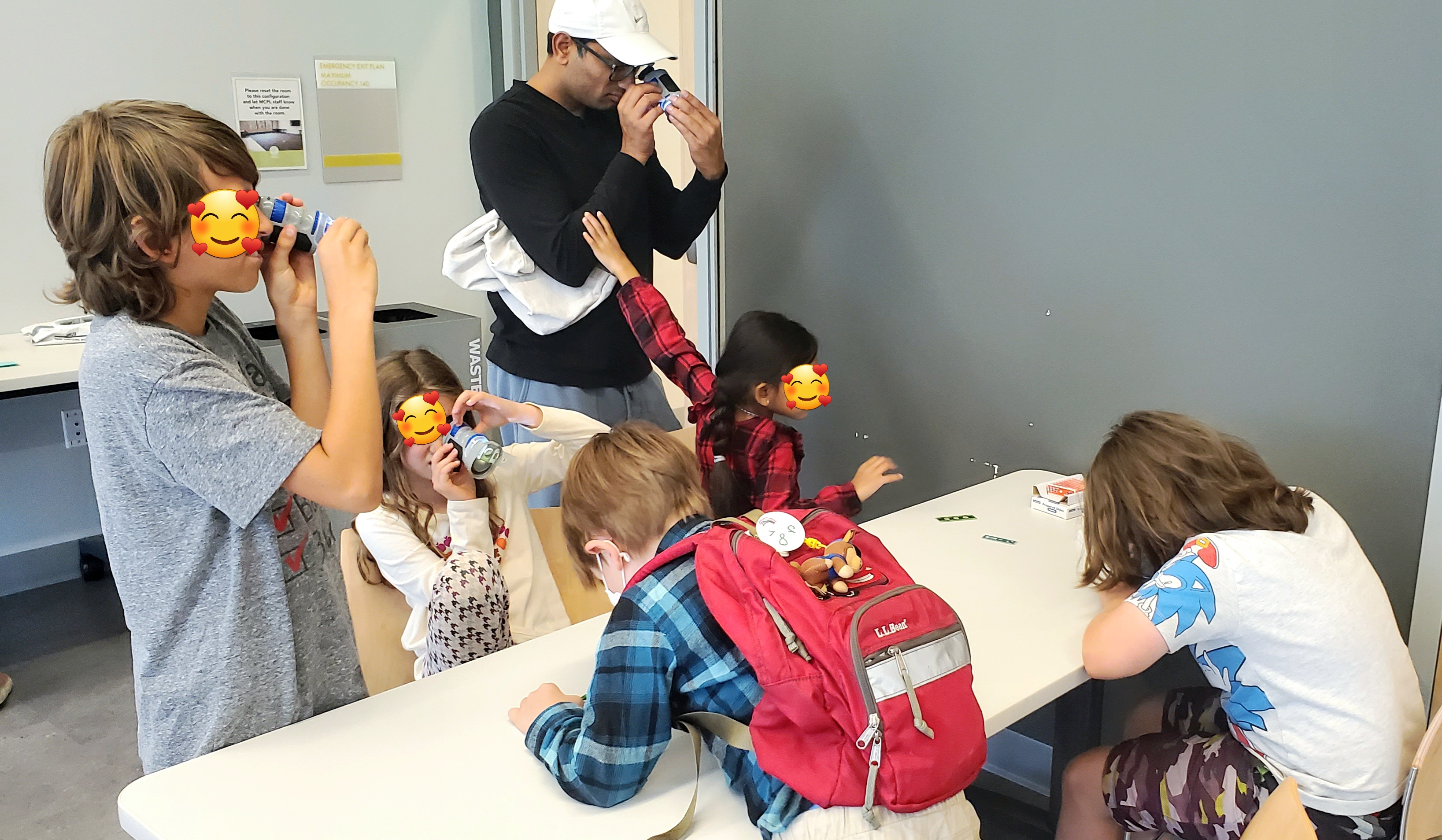
In this station, C utilized our collection of handheld microscopes and slides so kids could explore their sense of sight. One thing we love about the handheld microscopes is that you can use them on anything. Want to see your skin really close up? Put it to your arm. Want to see how your jeans look when magnified a ton? Put it to your jeans! You can place them on literally anything and look at the differences of whatever material or object you’re exploring.
Station 3: Touch
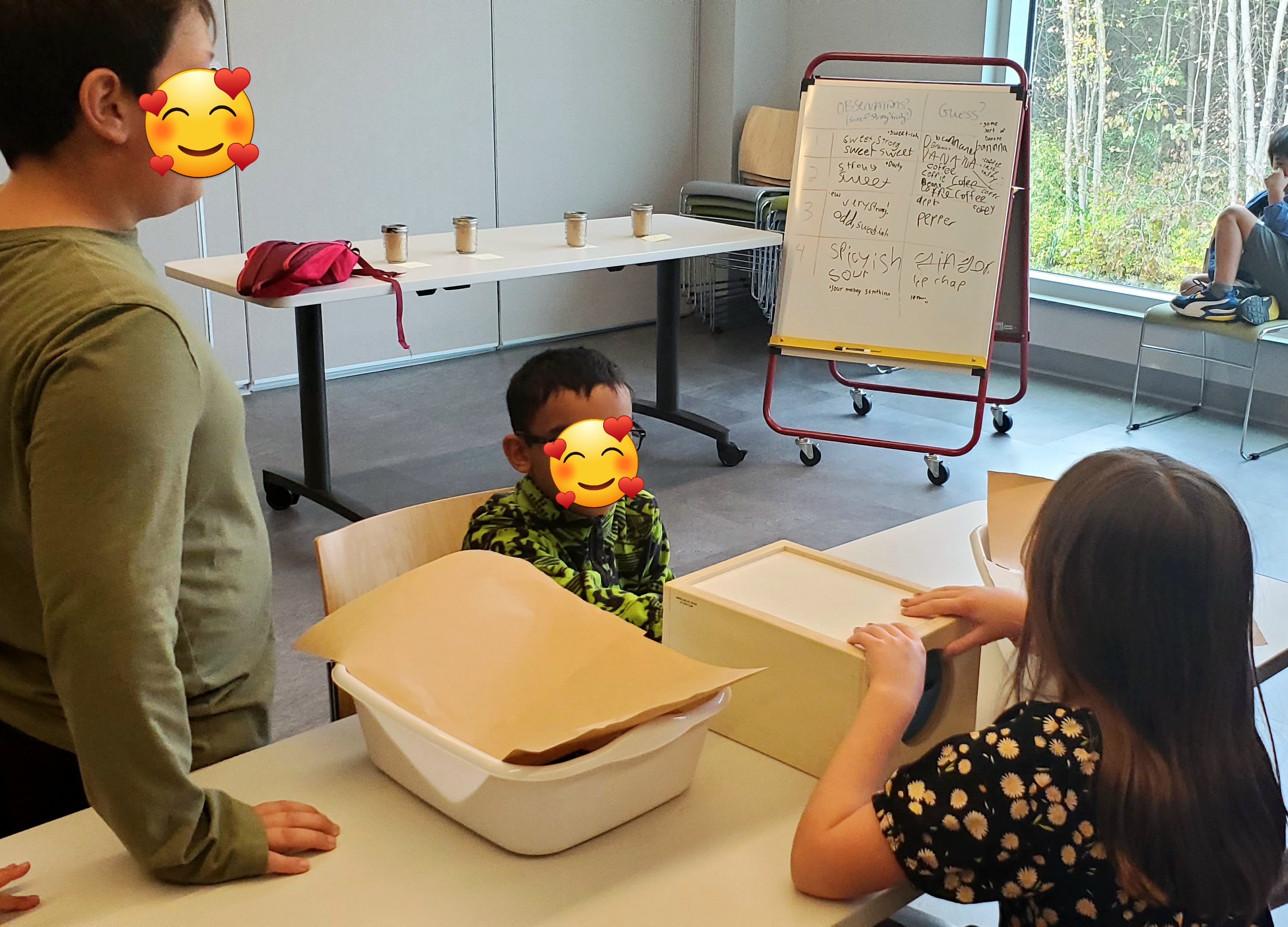
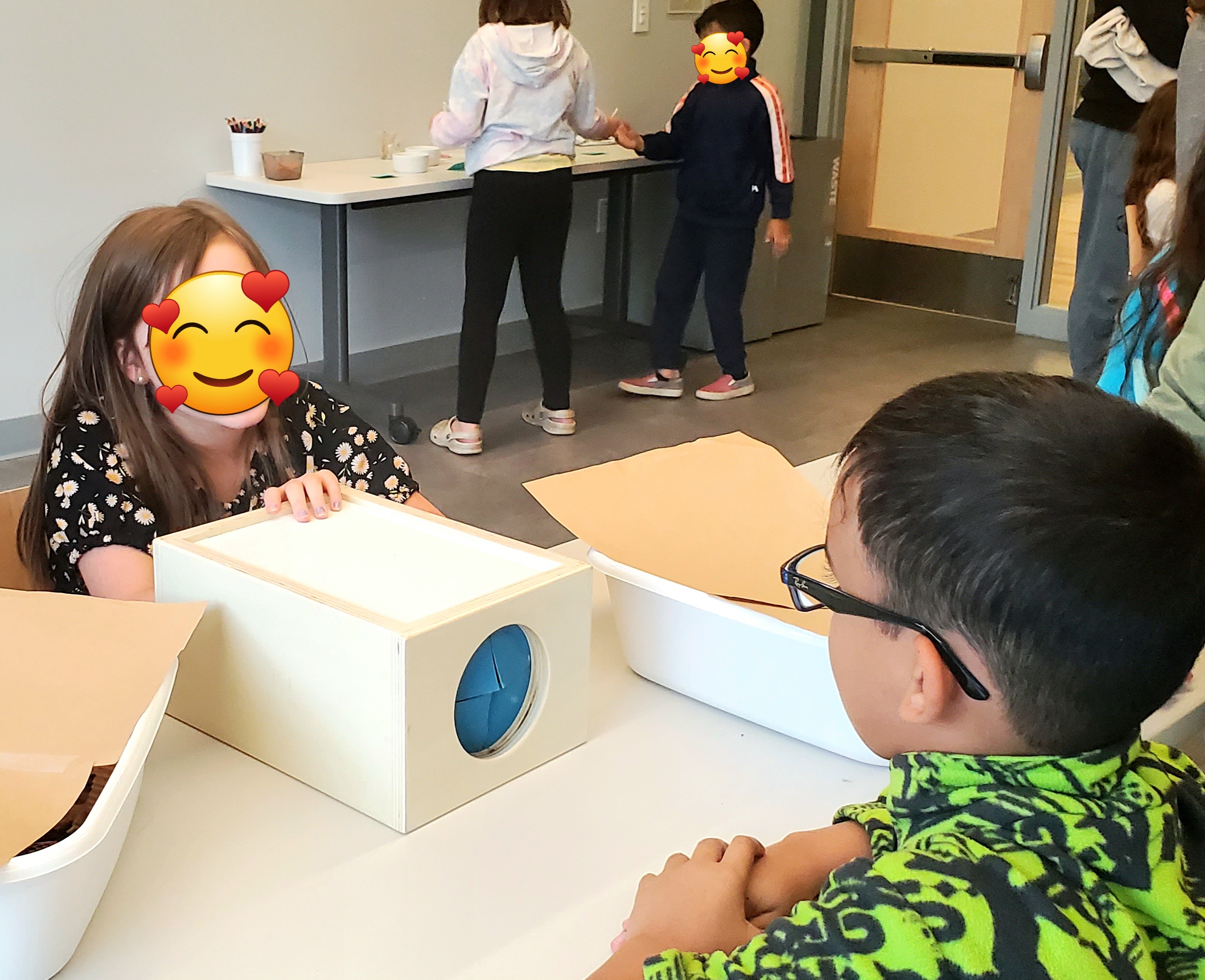
We own a mystery box, so for this station we asked the kids to work in pairs. One child would choose an object to secretly put inside the box and the other child would then put their hand inside and describe the item and try to guess what it was. This was one of the most popular stations in which kids were asked to really articulate their educated guess, then see the findings.
Station 4: Taste
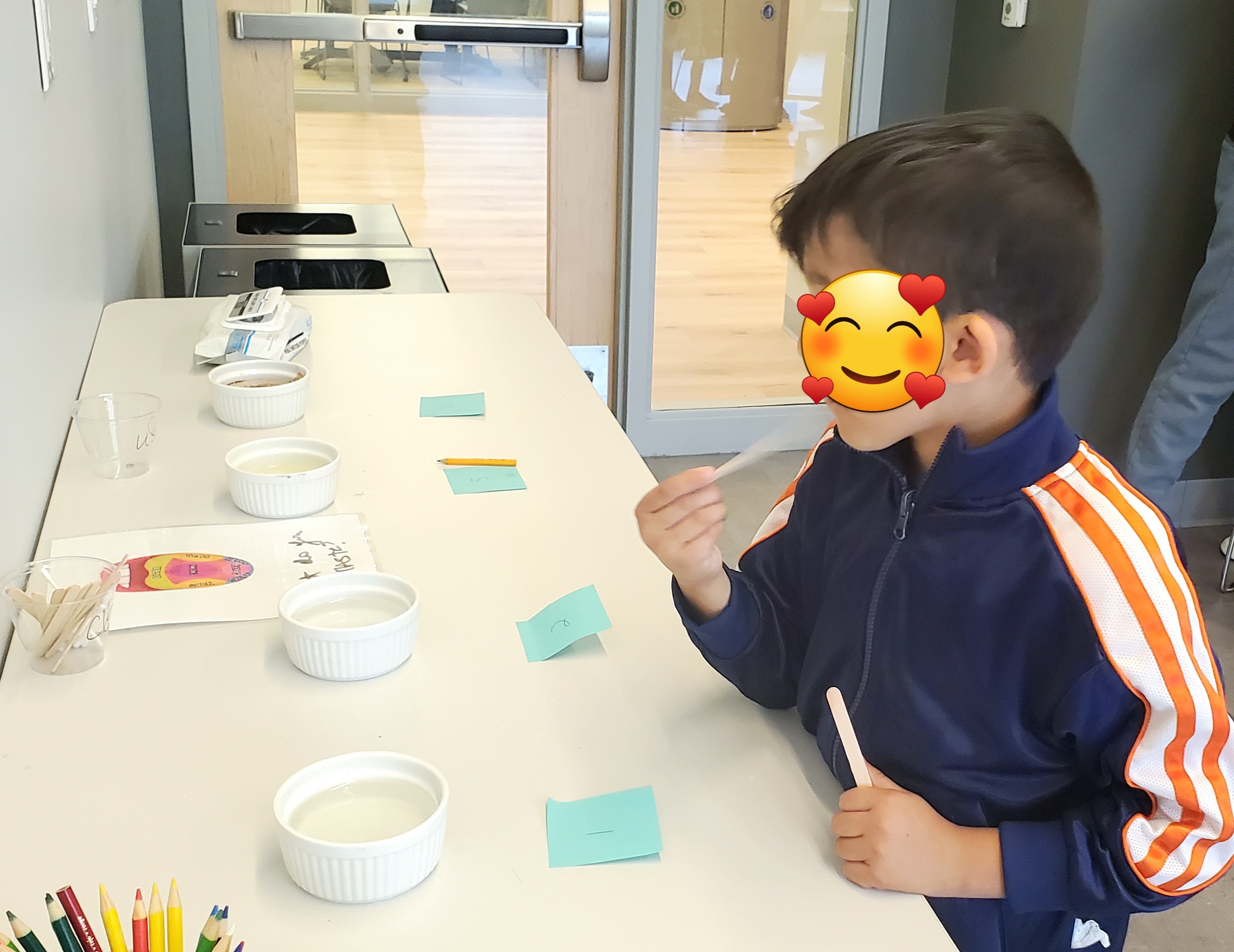
By far, this station (and the smell station) was the most fun to watch the kids explore! Kids would dip a clean popscicle stick into one of four bowls and taste what was inside. They’d then describe it and guess what it was. C used water with unsweetened cocoa, lemon juice, sugar water, and salt water.
Station 5: Smell
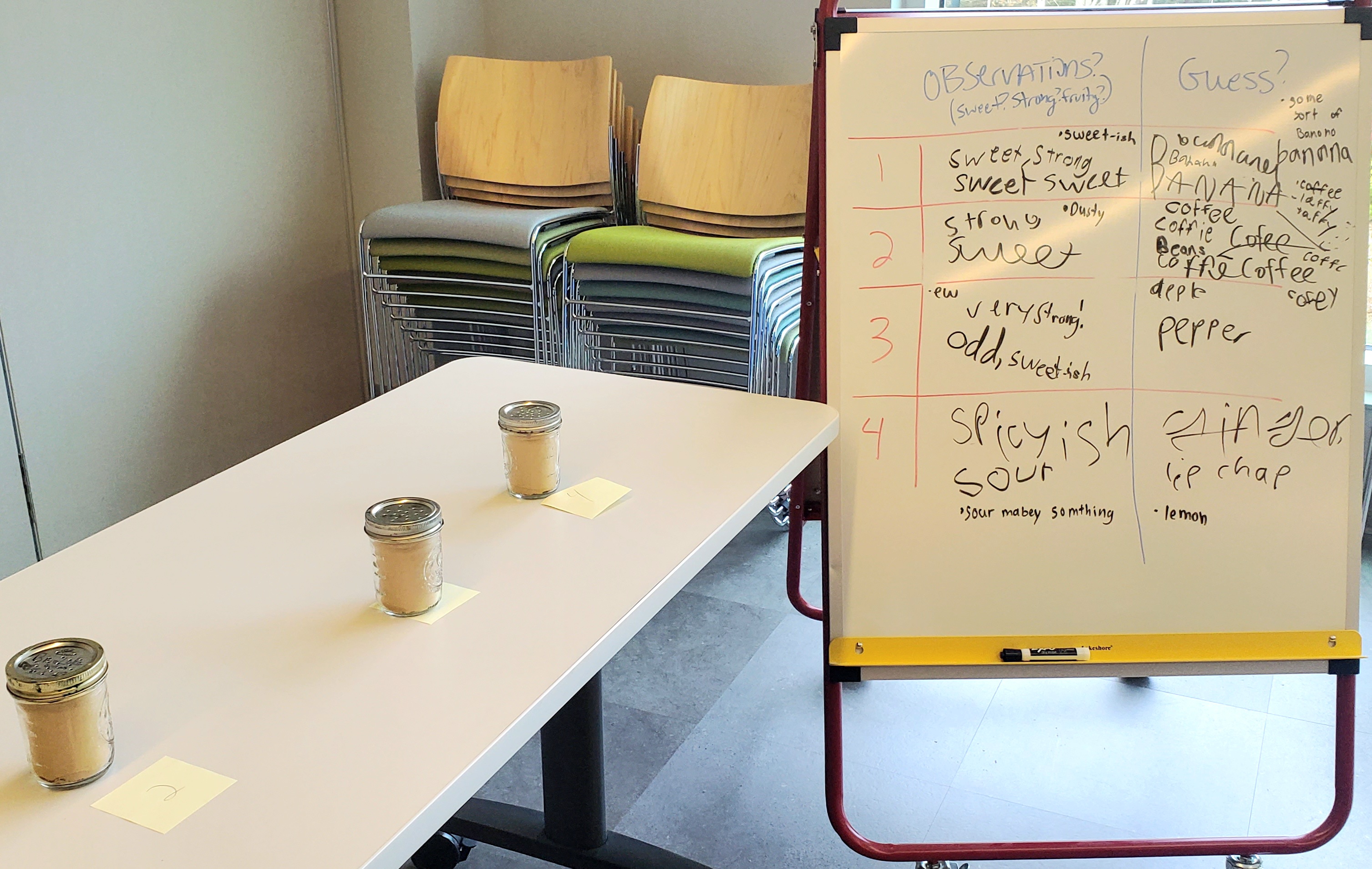
Here, C prepared four jars with scents in them. She put in coffee grounds, cotton balls soaked in extracts like banana and apple, andchopped up some ginger to put in the jars. The kids were asked to take a whiff, then write on the board what they observed of the smells (basically to describe the smell) and then to guess what was inside.
Station 6: Bonus Station!
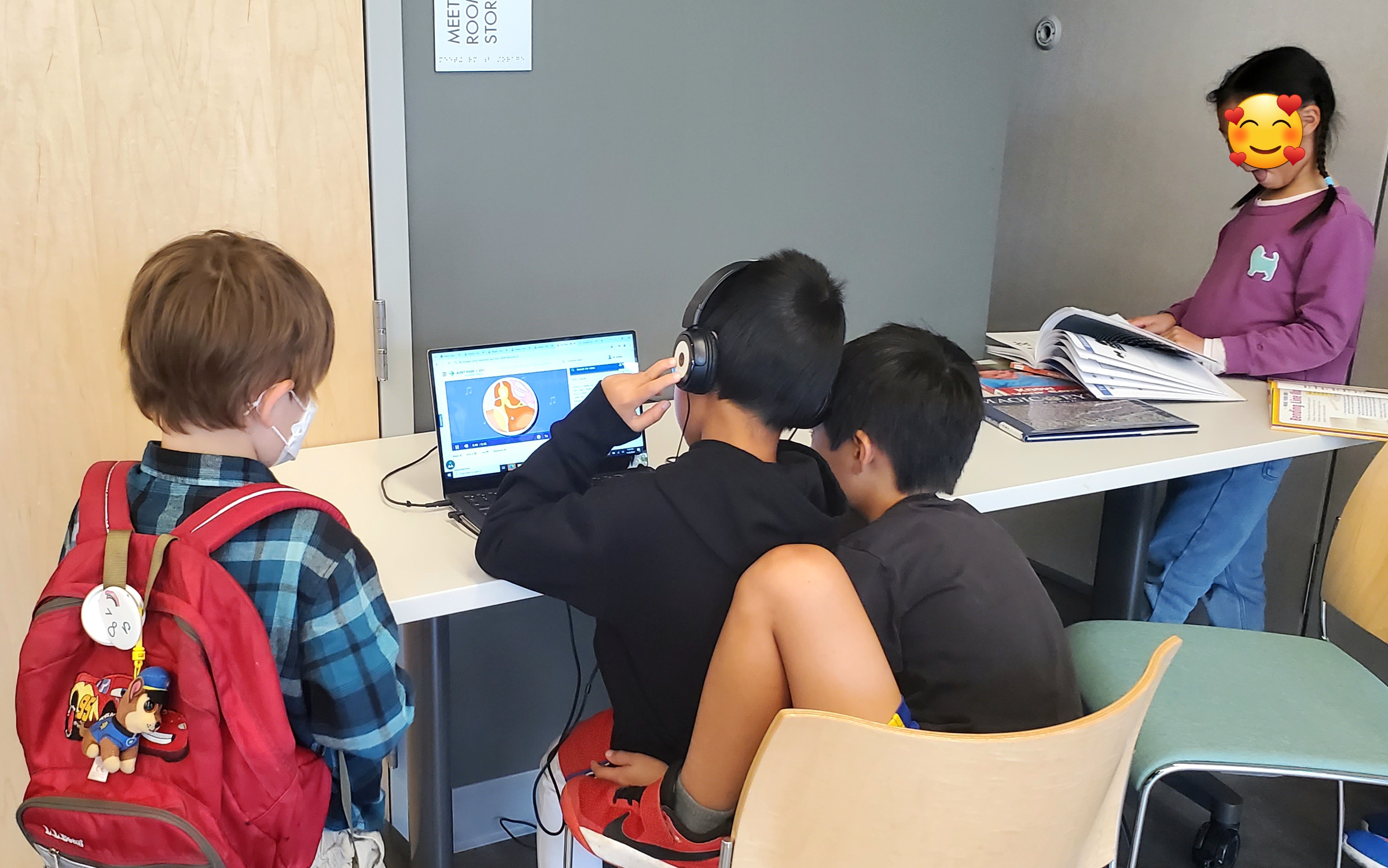
Our library subscribes to Just for Kids Access Video, and C had the great idea of making a playlist of videos that described the 5 senses to advertise the resource. This was an unexpectedly popular station. The kids really liked not only watching the playlist, but then exploring other favorite topics. To round that station out, C also gathered some fun optical illusion books to let kids explore tricks on our eyes.
Script/Flow:
1. Intro – (5 mins)
In this program:
We will learn to think just like scientists, using a process called the scientific method. You may not realize it, but you think like a scientist every single day. Whenever you ask a question and then explore the possible answers, you are using the types of skills that scientists use in trying to understand our world. That’s what scientists do!
For example, scientists who study dinosaur fossils are called paleontologists. They ask questions about how dinosaurs lived and died, and they search for answers to their questions in the fossils they dig up from the ground.
It is the job of scientists, no matter what area of science they work in, to ask questions and explore possible answers, and that’s something everyone does. That’s what we’re going to do today.
2. Station Introduction – (20 mins)
C briefly introduced each station and how to interact with it. The kids were then set loose to explore at their own pace for about 20 mins.
3. Craft: Slime – (30 mins). Looking back on it, we probably should have done regular slime as it would’ve taken out some of the messiness. But! The cloud slime was another fun way to tie in the five senses as it was fluffier than most slimes. Here’s the recipe we used:
CLOUD SLIME
2/3 cup of Elmer’s White Glue
1/2 teaspoon Baking Soda
1/4 Cup Water
2 cups Shaving Cream
1.5 Tablespoons Contact Lens Solution *must contain boric acid and sodium borate
Any mix-ins, colors, etc you’d like!
Instructions:
Add glue, water, and baking soda to a bag, then mix together
Add shaving cream and any mix-ins, then mix
Now slowly add in your contact solution.
Add in 1 tablespoon, stir for 5 minutes and then add in the 1/2 tablespoon. The first tablespoon you add will let you start to knead it. And the last 1/2 tablespoon will bring the stickiness down and it shouldn’t be sticking as much to your hands.
4. Closing – (5 Mins)
C thanked the kids for coming and asked a few follow-up questions to help us evaluate the program and what the kids enjoyed or didn’t enjoy. Then it was cleanup time for us (a long and messy process because of the slime).

Thoughts/How It Went:
Overall, the program went really well! Almost all of the 24 tweens were actively engaged (there always seems to be one or two who are less into it in programs like this. Usually, we find out that they were forced to come by their grownups. sighhhh). While the hands-on stations were really well received, the slime was the star of the program. But also the most difficult piece. The wide age range of 7-12 year olds meant that some of the kids had made slime before and, despite our instructions, moved ahead in following the recipe with us while the younger kids needed a little more hand-holding. It didn’t help that the two types were mixed and at the same tables as each other, meaning one table would be far ahead of where the room was and some of the young kids at those tables messed up the recipe because they were trying to keep up with the older kids at the table and not listening to us directing the room. So, we learned a little from that; however, everyone left happy and with slime. 🙂
I can’t wait to see what C comes up with next!
 Librarian Ginny