STEAM is one of those trendy, golden-boy, buzz words now a days. Don’t get me wrong, I am aboard the STEAM train and believe deeply that science, technology, engineering, arts and math are extremely important, but I also think there should be some thought and real-world applications behind STEAM programs.
I wanted to do a early elementary program based on STEAM concepts. When I do STEAM programs, I try to tie it into the real world as well as a literary one. I took the concept of engineering for this program as it lends itself easily to the story of the Three Little Pigs and the concept of sturdy buildings and the importance of engineering is super apparent and tangible for younger kids.
Introduction: I began the program with a telling of the classic Three Little Pigs. Then the kids and I talked about some of the themes of the story. Naturally, the conversation went to the building materials that the pigs used and how some of them were all wrong for building. That’s what I was hoping to zone in on. I wanted to show them it’s not just the materials you use, but also how you use them. I wanted to introduce the design process.
Demonstration: Before introducing the design process, I wanted to do a little demonstration. I told the kids that I could make a single piece of paper and a couple pieces of tape hold a heavy book. The kids didn’t believe me! I formed the paper into a circular column, stood it on a table, then gently set a heavy book on top. It held perfectly. We took about 10 minutes talking about the shape, then trying out other shapes like squares and triangles to see what held better. The circular column always won. Why? Because in the circular shape, there’s no weak corners and no stress concentration. Meaning the weight of the book is evenly distributed on the entire circle, whereas in the other shapes there’s a lower resistance to bending and buckling.
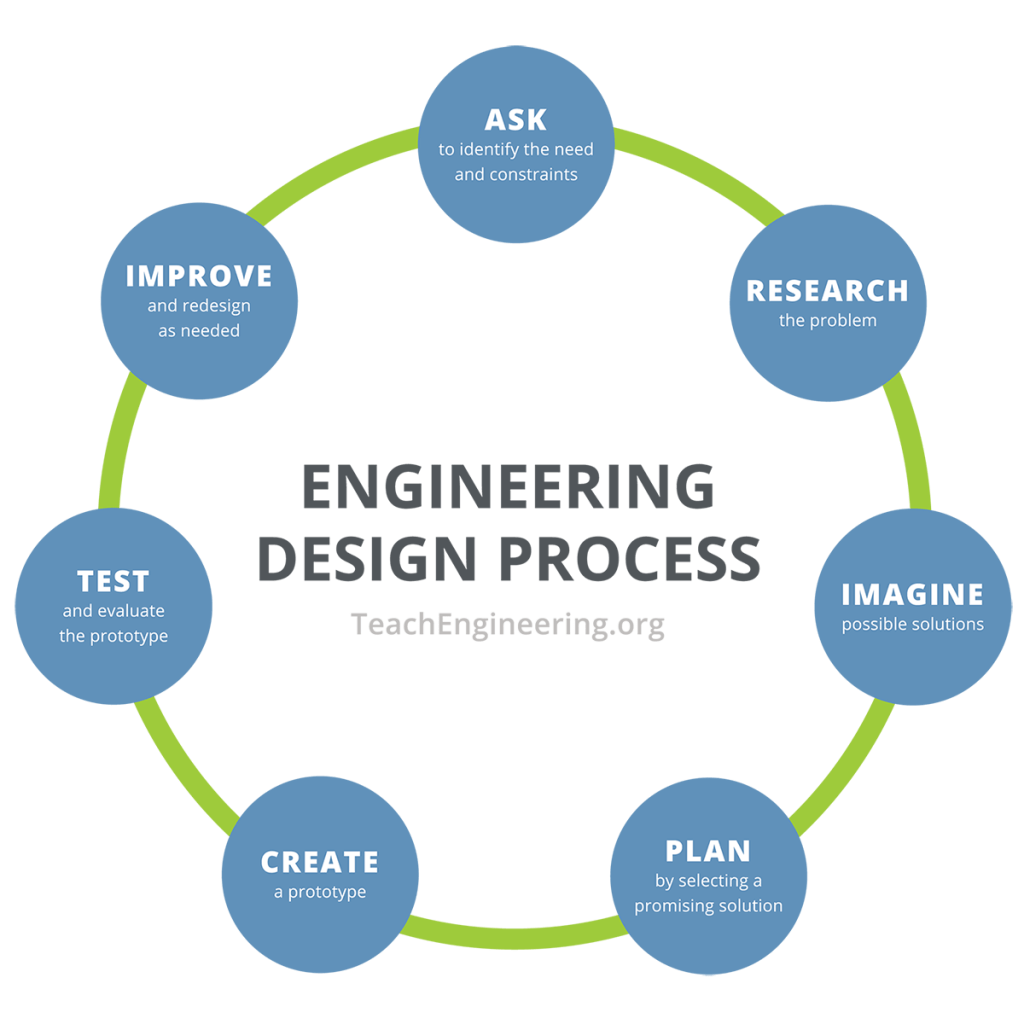
It was time to introduce the design process. It applies to more than just engineering, it introduces the scientific method in an easy to understand manner and encourages problem-solving. More than anything, though, I like how it communicates a low pressure attention on the concepts of failure and perfection and an emphasis on tinkering and experimentation.
After the kids had a good grasp of the process, we broke out into different stations to work through it with a couple different building projects.
Program Stations:
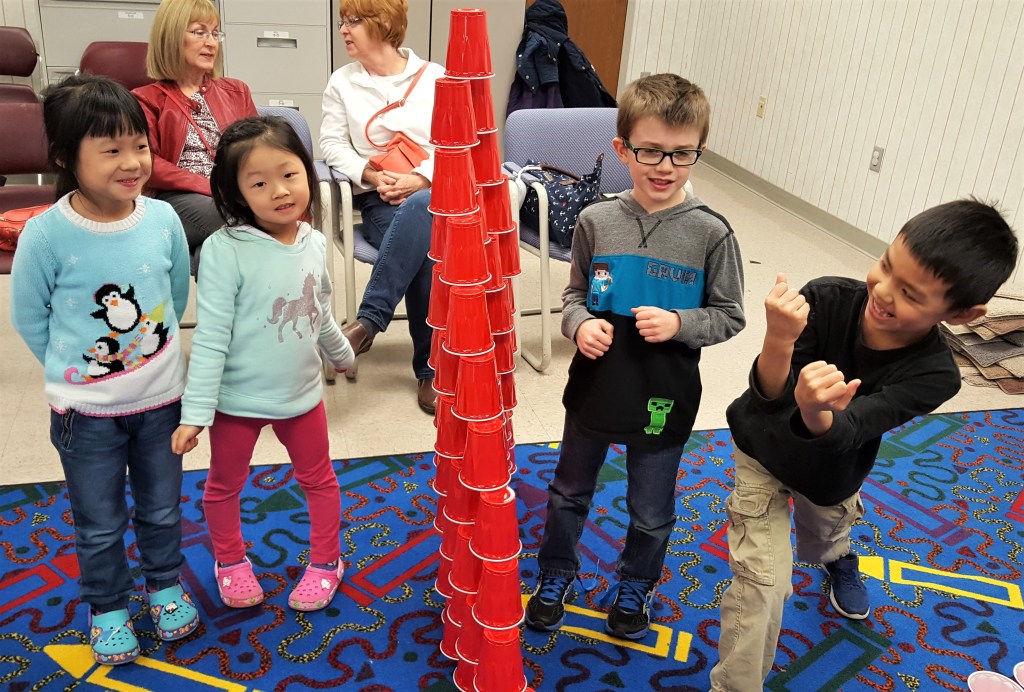
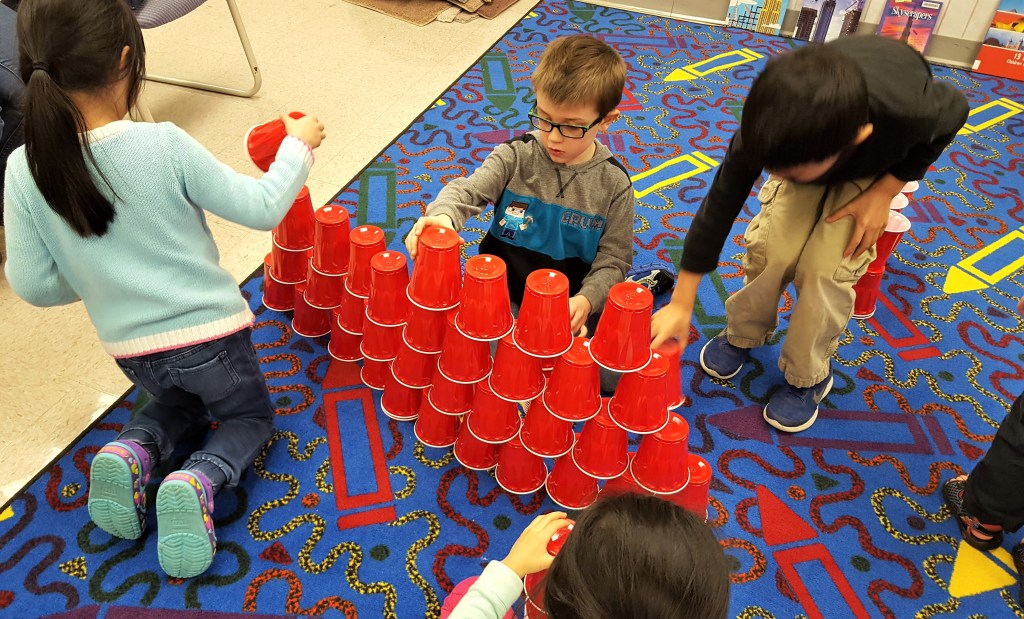
Our first station represented the Three Little Pig’s straw house. We had loads of flimsy plastic cups and challenged the kids to make a structure that would withstand a hair dryer blowing at it. This group’s structure didn’t do too well with the hairdryer, but another group’s who made a more dense structure held up well.
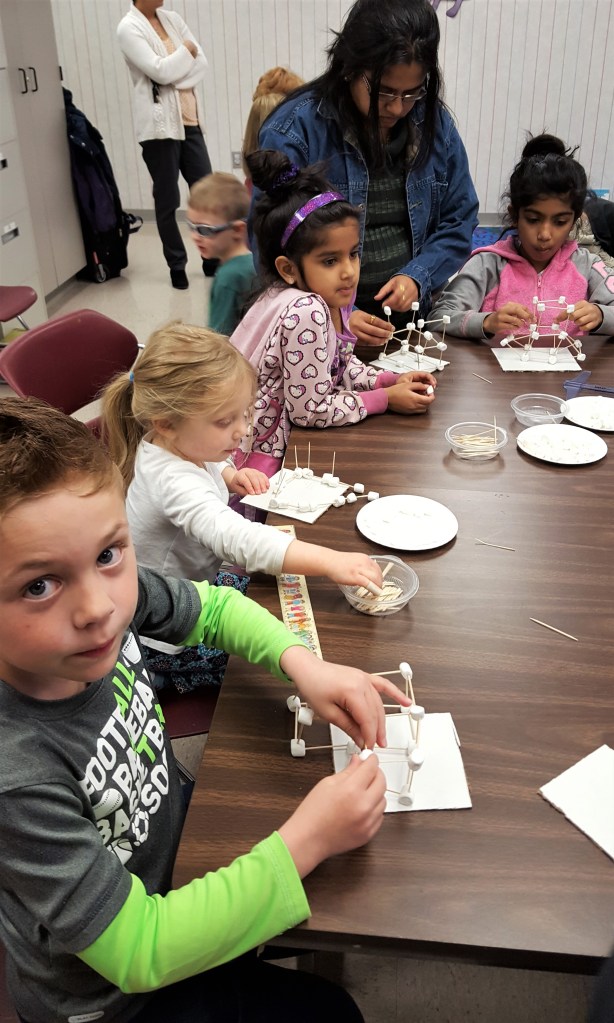
The second station represented the Three Little Pig’s stick house. We used the age-old toothpick and marshmallow buildings with the intent to test them on how well they held up. Since the whole thing would blow over with the hair dryer, we decided to test these with a jello earthquake.


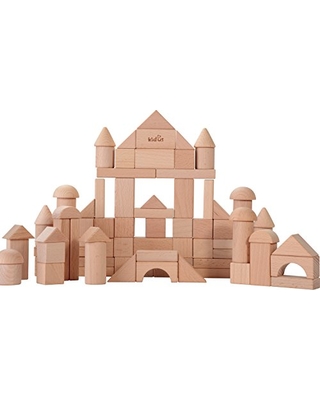
The last station represented the last little pig’s brick house. I could just kick myself for not getting photos of the last station in action. I had tied a tennis ball to a broom, which was taped to two chairs to create a wrecking ball. The kids then used standard building blocks to see if their structure would still stand.
Evaluation and What I Learned:
This was a fairly easy and cheap program to set up and a lot of fun for the kids. Even the caregivers were having fun! One thing I’d definitely change is to slightly rethink it so that the structure test was the same for all three kinds of building materials so that it’d be more of a direct comparison.
 Librarian Ginny