My job at the public library allows me to work with children ages 0-12, but my specific position is to be the point-person for early literacy needs, programming for kids 0-6 and especially 0-3. I hold a weekly lap-sit storytime for the 0-3 crowd and have experimented with timing, age limits, set up, activities, etc. It’s had a lot of tweaks, but I believe that what I’ve settled on is working really well for our community. Here’s what a typical storytime for this age group looks like!
I have two storytimes back to back every Wednesday morning for our littlest patrons. Wonderful Ones, which is for birth to 18 months, and Terrific Twos, which is 18 months-2.5 years. I made this age restriction for a couple reasons…
- I noticed many of our caregivers with very young infants were hesitant to let their child explore when there were toddlers walking and tripping around. I let this breakdown of ages be a guideline; however, so that caregivers and their children can fit in wherever they feel the most comfortable.
- It also allows me to lean into some of the activities that work best for the individual age groups without feeling like I’m leaving some of our group out. For example, I use some rhymes and songs that might require a little more finger dexterity with the slightly older group.

Opening: We blow bubbles and allow general play and talking until about 5 mins after the beginning of the program. This gives caregivers a chance to get settled in and to not feel pressured about being “on time.” It also allows the kids a special treat that engages them and gets them ready for storytime.
Hello Song: There are two main components to this. First, each season (Fall, Winter, Spring, and Summer), we change our hello and goodbye songs. This allows the kids and caregivers to really learn and participate during the song. Plus, repetition allows a child to form an understanding and even attempt to imitate. It’s essential to give kids time to practice their new skills, improve confidence, and strengthen the connections in their brain that help them learn. Second, I always choose a hello song that we can insert the children’s name into. This helps me (and other caregivers) learn their names, and also gives a special welcome to each child.
Massage Song/Rhyme: This is something that is a little new to my library. I’ve spoken a lot with my local Nurse Family Partnership group and something they mentioned that a lot of their clients need help with, especially first-time parents, is creating a foundation of loving touch. So I took a baby massage class and learned just a few rules and tips to share with caregivers. Every storytime, we do a short massage song or rhyme.
- We do the same song/rhyme for the entire season.
- I give suggestions on how to move their hands, but also give them the freedom to do as their child likes.
- I make sure to let the parents know that this is a great foundation to creating a strong bond between themselves or to even recenter after a meltdown or hectic day.
- And the best bonus of all? It’s a great way to introduce the concept of consent. I always pause and let my caregivers ask their child if they’d like a massage before we begin.
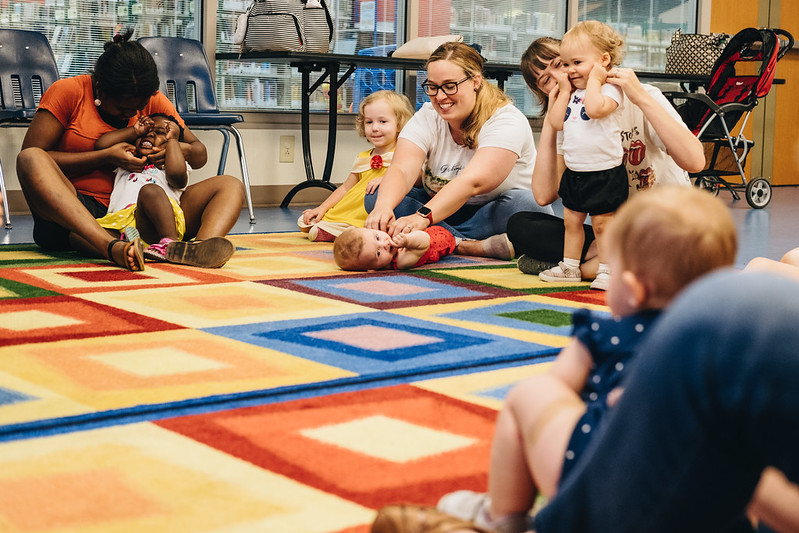
Songs & Rhymes: During each storytime we do about 5-7 rhymes/songs. I choose a mixture of tickle, bounce, tapping, and lifting rhymes. I have a list of about 30 rhymes/songs for each of the seasons in which I pick about 8-10 that will rotate between so that there’s A LOT of repetition. This helps the children, as they need repetition at this age, but it also helps the caregivers memorize them so that they have a stash to go to when needed.
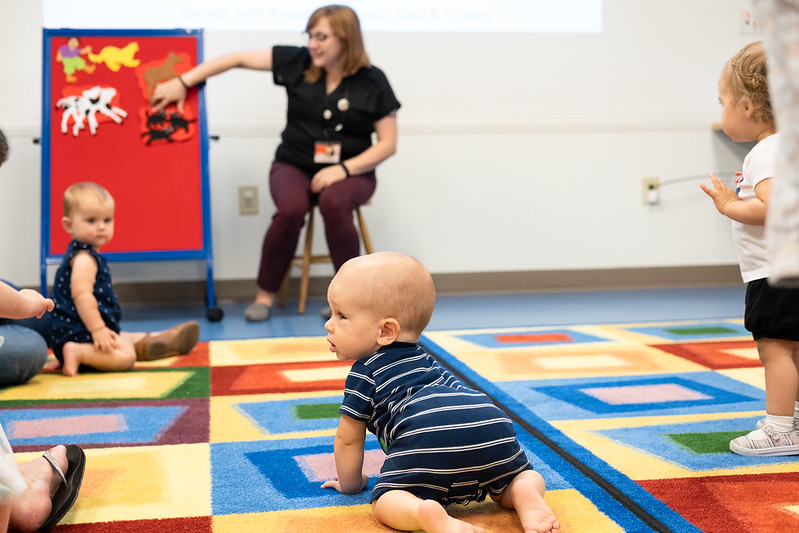
Book: In between the rhymes and songs, I read one book geared toward toddlers such “I Went Walking” by Sue Williams. Occasionally, I’ll read the book, then also do a felt story of the same book (again, repetition for the win!), pictured on the left. If I don’t use felt for a book, I try to work it into one of the songs or rhymes.
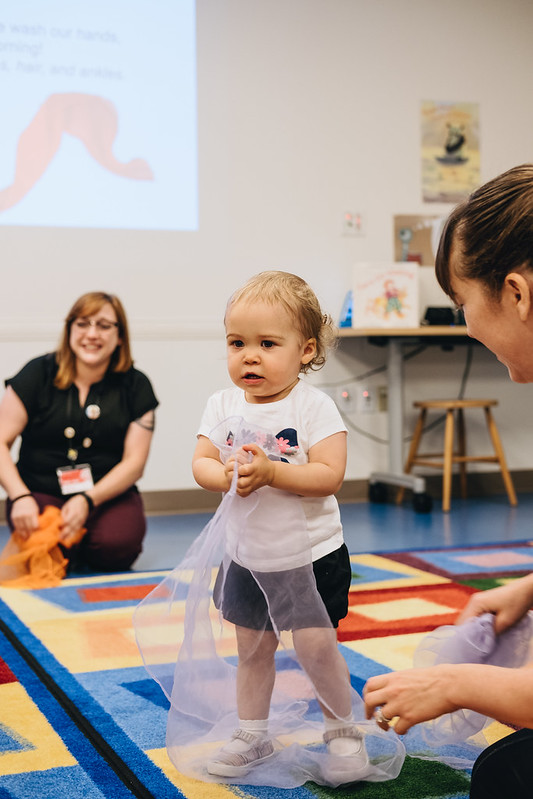
Manipulatives: This is a fun way to engage the littles in a different way! Plus, by this point in the program, everyone is ready for a little more movement and the introduction of a manipulative pulls the focus back to you. I rotate between using scarves, shaker eggs, parachute, musical instruments, and doing circle dances. I’ll talk more about these in future posts.

Toy Time: I always end with toy time. It allows really important socialization to happen. Not just between the kids, but also between the caregivers. Being a parent of a little one can feel isolating, especially to first time parents, so this gives them an opportunity to socialize and build up their support network. It also allows me to lay the groundwork and interaction necessary to become “their librarian,” which I think is super important to trust and community relationships.
That’s it! That’s the general formula I use for infant/toddler storytimes!
*NOTE: Images used here were taken by my library’s marketing and communication team. They do lovely work and helped me capture some fun moments in this storytime. So here’s a big THANK YOU and credit to them!
 Librarian Ginny