School librarians have it rough in a lot of aspects. First, from what I know of the typical school library, they don’t have a huge budget. Then with the added pressure of it being a school library as opposed to a public library with a completely different and concentrated patron base, it’d be difficult to choose the right materials for the right age groups. After reading parts of Weiner’s Graphic Novels and Comics in Libraries and Archives: Essays on Readers, Research, History and Cataloging, I feel like I have a slightly better understanding of why choosing graphic novels in a school library setting would be especially difficult.
I’ve seen this huge trend in making literary classics into graphic novels. At first, I was really excited about this. For me, it was another adaptation that I could devour and enjoy very similar to how I’m fond of Pride and Prejudice by Jane Austen and will watch and read just about anything that’s based on it (A guilty pleasure, can’t help it). There are good adaptations and…well…not so good adaptations.
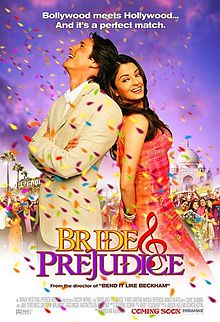
Case in point.
In all seriousness, though, this pretty much reflects how I feel about some classics being turned into graphic novels. While there are some really great adaptations with great writing and artwork, there are also some with horrible writing and not the best artwork. Take Jane Eyre from the Classical Comics series. The artwork in it was good, though not my personal favorite, however the text in the graphic novel was almost verbatim to the literary novel.

Now, from what I understand, a lot of the appeal in having these classic literature adaptations is that it’s supposed to attract reluctant readers. If this is the case (and let’s pretend, for a moment, that people like me who will read and watch anything adapted from something I already love don’t exist) then I highly doubt a kid who doesn’t want to read the classic literature in the first place is going to do too much better with this format if the text is exactly the same. Yes, it’s in a more attractive format and it might initially be a lot nicer with the added factor of the artwork, but I don’t think it’ll necessarily make it easier or better for the kid.
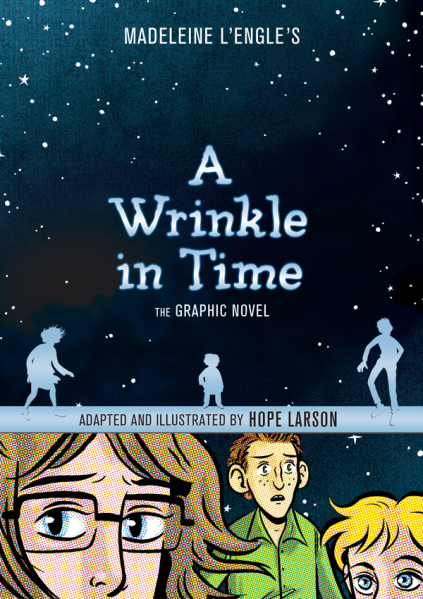
Now, if we consider A Wrinkle in Time: The Graphic Novel by Madeleine L’Engle and illustrated by Hope Larson, I see a much more promising adaptation. This, in part, might be because it takes a fresh look on the novel. It diverges, in places, from the original in a way that adds to the characters and situations instead of just repeating them.
Sifting through the good and bad of these adaptations can be difficult and I can see where these kinds of variations can have a place in libraries and school libraries. This being said, I don’t think most of these, especially the ones that aren’t done well, are what Heidi K. Hammond (Weiner 2010) refers to as the “independent and art graphic novels” which tend to circulate less often than other genres such as superhero, comedy, etc. It just proves that evaluating a work, whether it’s a novel, graphic novel, or a film is complicated when trying to assess its value within a context of an age group or specific library (public or school, or even based on the community you live in). Finding graphic novels that not only are quality in artwork and text, but also fit your need can be difficult. And this, of course, doesn’t even include all the other difficulties of being a librarian in a school setting.
Works mentioned in this post:
Larson, Hope, and Madeleine L’Engle. A Wrinkle in Time: The Graphic Novel. N.p.: Farrar, Straus and Giroux, 2012.
Sanders, Joe Sutliff., Amy Corzine, John M. Burns, Terry Wiley, and Charlotte Brontë. Jane Eyre: The Graphic Novel. Towcester: Classical Comics, 2008.
Weiner, Robert G. “Part 2: School Libraries.” Graphic Novels and Comics in Libraries and Archives: Essays on Readers, Research, History and Cataloging. Jefferson, NC: McFarland &, 2010.
 Librarian Ginny
I find it interesting that the comic version of Jane Eyre you posted says “classical comics study guide” on the cover guide. It kind of makes me feel right off like the work isn’t supposed to have any value in itself, that’s it worth only comes from the original. This seems to be sending the wrong message. It’s almost like saying, “We don’t think you are capable of handling or appreciating the original, so here it is with pictures.” I think comic adaptations of classical works should have some sort of value of their own, independent of the original.
I thought so, too. It’s kind of as if their putting it on the level of Spark Notes or something. I find this really, really damaging to graphic novels and comics because it’s almost delegitimizing them by equating them with a study guide.